
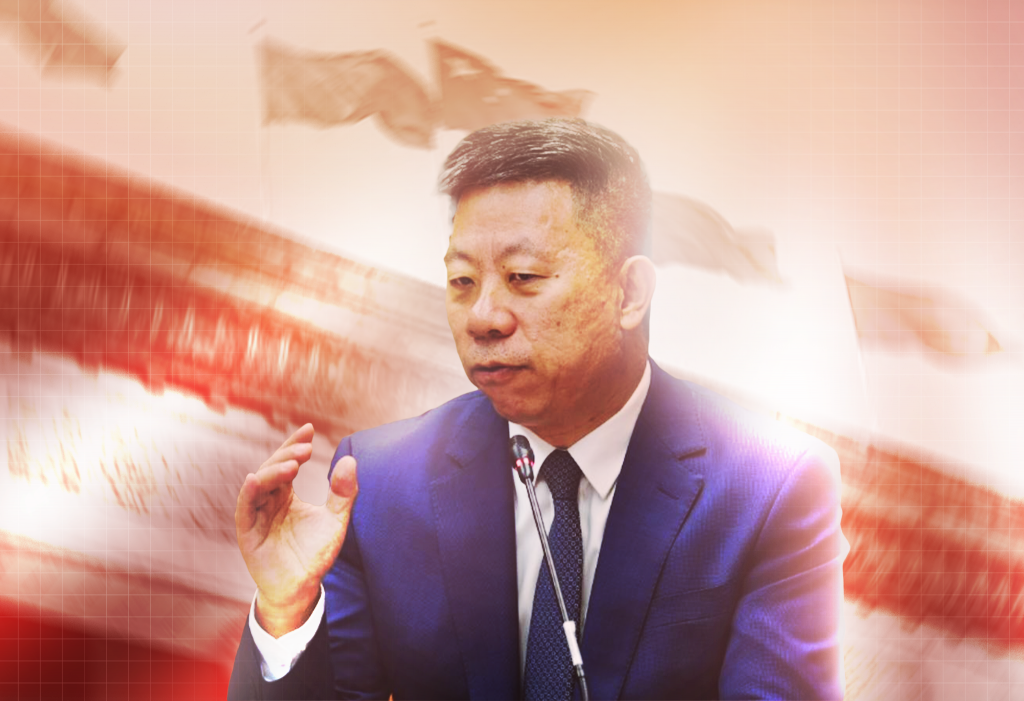
Graphics by Alfred Espiña
MANILA, Philippines–The Defense Press Corps of the Philippines (DPC) rejected a remarks made by the Chinese Embassy in Manila against Filipino journalists covering the West Philippine Sea, Monday, October 19.
The said remarks began on October 15 when Chinese Ambassador Jing Quan said that China could use force and defeat the Philippines if it wanted to, but had instead chosen peace, with Filipino journalists reported the ambassador’s remarks verbatim.
Two days later, on October 17, the Chinese Embassy posted on Facebook that some Philippine politicians and reporters do not understand the facts and only twist stories to make them bigger.
“Some Philippine politicians and reporters have very limited comprehension about facts but are good at exaggeration, taking things out of context, and creating hype. Their remarks are inflammatory and baseless,” the Chinese Embassy said in its Facebook post.
In a statement, DPC, founded in 1967 and one of the oldest media organizations in the country, said that the Embassy’s “insulting intent” was clear to journalists covering the West Philippine Sea and Manila-Beijing relations.
The DPC said that words have consequences, adding that every statement and interview carries consequences whether intended or not.
“Words have consequences. Every statement made in an interview, every answer given to journalists, carries weight and consequences, intended or not,” the DPC said.
The group also threw back language often used by Chinese personnel during radio challenges against Philippine aircraft and vessels in the country’s exclusive economic zone.
“You bear the responsibility for whatever consequences of your actions,” the group said, echoing the radio challenges heard by Filipino journalists and troops in the West Philippine Sea.
The DPC stressed that the political fallout from the ambassador’s remarks is neither within the control nor the responsibility of journalists.
DPC further explained that Filipino journalists have repeatedly traveled by sea and air to the West Philippine Sea, where they witnessed Chinese aggression including water cannon attacks, dangerous maneuvers, and collisions.
Despite those tensions, the group said journalists have consistently sought responses from Chinese officials to ensure fair and balanced reporting.
The DPC said it must be difficult for a country without a free press to understand journalistic independence exercised without state control.
“We understand. Not all journalists are as fortunate as those who live and work in a true, albeit imperfect, democracy where the press operates freely and independently without state control,” the group added.
Meanwhile, President Ferdinand Marcos Jr. said the envoy’s comments came across as intimidating and undiplomatic and that he wants to talk to the ambassador about it personally.
“It sounded very much to me like a threat and not a very diplomatic statement. It deserves discussion between me and the envoy,” Marcos said.
Further, as of October 19, the Senate Majority Bloc is preparing a formal resolution condemning Ambassador Jing Quan’s remarks.
“This is hostile and undiplomatic, and does not reflect the mutual respect expected between two sovereign nations,” in a statement released by the Bloc.
Senator JV Ejercito said senators discussed the resolution and could act when Congress resumes on November 9, calling the envoy “very rude, very hostile and very undiplomatic” and urging Beijing to replace him.
“He is very rude, very hostile and very undiplomatic. Beijing should consider replacing him if they want to maintain good relations with the Philippines,” Ejercito said.
Tensions rose after the Chinese Embassy posted on Facebook on Friday daring lawmakers to declare the envoy persona non grata.
“If you want to declare the Chinese ambassador persona non grata, just do it. Otherwise, stop bluffing,” the embassy posted.
However, by Sunday, October 18, the embassy shifted tone, saying Beijing remains willing to manage differences through dialogue.
“China remains committed to managing differences with the Philippines through dialogue and consultation, but this requires mutual respect and sincerity,” the embassy said.
The DPC invoked Article 2 of the United Nations Charter, which obliges states to refrain from the threat or use of force and to settle disputes by peaceful means.
“Peace and stability are nurtured through restraint, dialogue, and transparency, not through intimidation or the threat of force,” the group said.
It added that true peace requires creating space for mutual understanding, something that cannot be achieved if China continues to shoot the messengers.
Tensions remain high as both sides continue to exchange statements, with reactions still coming in and the situation evolving, as this story continues to develop.
Article by Aldred Superales