
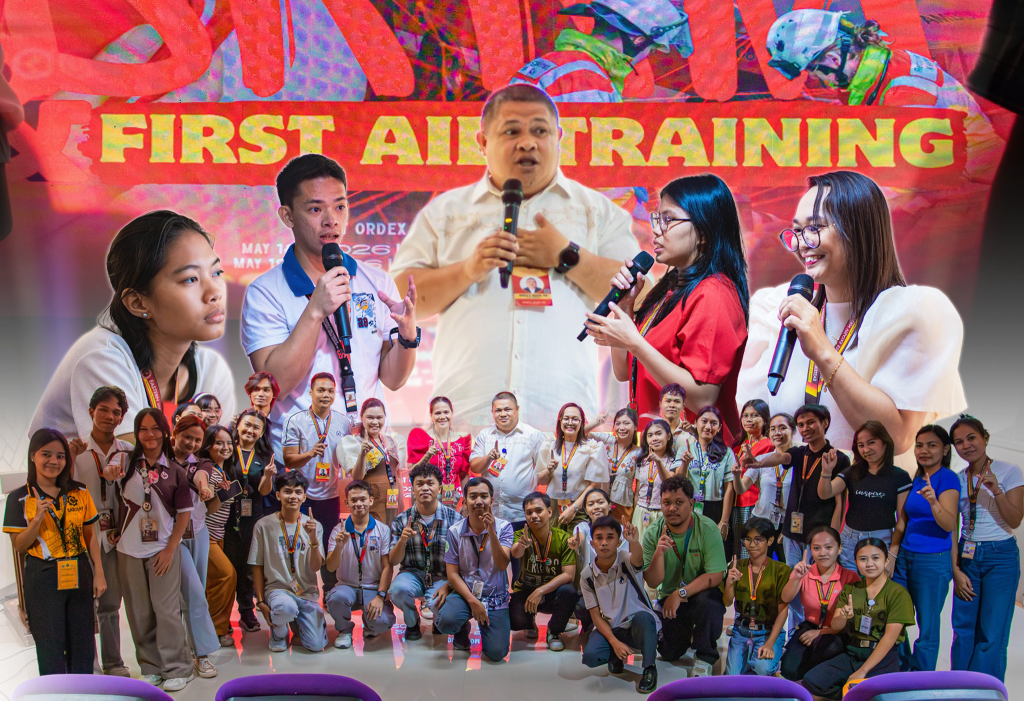
As part of efforts to strengthen disaster preparedness and equip student leaders with essential life-saving knowledge, the Student Affairs and Services Office (SASO), through the Supreme Student Government (SSG), launched an Emergency Response Training at the ORDEx Studio Room, Monday, May 18.
The activity gathered student leaders from various organizations and colleges across the university to deepen their understanding of disaster preparedness, risk reduction, and emergency response.
The training was led by Disaster Risk Reduction and Management Office (DRRMO) Director Dr. Ronald Madera, who guided participants through key concepts in disaster safety and mitigation, as well as the responsibilities of student leaders during emergencies.
Dr. Madera emphasized the importance of fostering a culture of safety, preparedness, and resilience within the campus community, noting that such training is necessary not only for leaders but for the entire university.
“Student leaders are not just leaders but also champions of safety, preparedness, and hope,” he stated.
He also highlighted the significance of the Philippine Disaster Risk Reduction and Management Act of 2010, or Republic Act No. 10121, alongside the country’s DRRM Framework, which promotes proactive disaster preparedness and community involvement.
Meanwhile, Reynalyne Sabusap, Bachelor of Science in Electrical Engineering (BSEE) Representative, said the activity served as an eye-opener on the importance of preparedness during emergencies and disasters.
“Many students often overlook disaster preparedness because we think emergencies will not happen anytime soon. But through this training, we realized that being prepared can save lives, especially in a country like the Philippines where natural disasters are common,” she said.
The event also served as a venue to strengthen the network of safety advocates, including the institution’s Emergency Response Team (ERT), which will spearhead campus safety initiatives.
Participants were likewise reminded to keep emergency contact numbers accessible and understand the role of the ERT during crisis situations. Basic risk assessment techniques and strategies to minimize casualties during disasters were also discussed.
The training will continue on its second day on May 19 with practical exercises aimed at translating knowledge into action and further strengthening the university’s resilience against potential threats.
Article by Kyla de Paz