
I have spent most of my life sitting on the other side of the classroom.
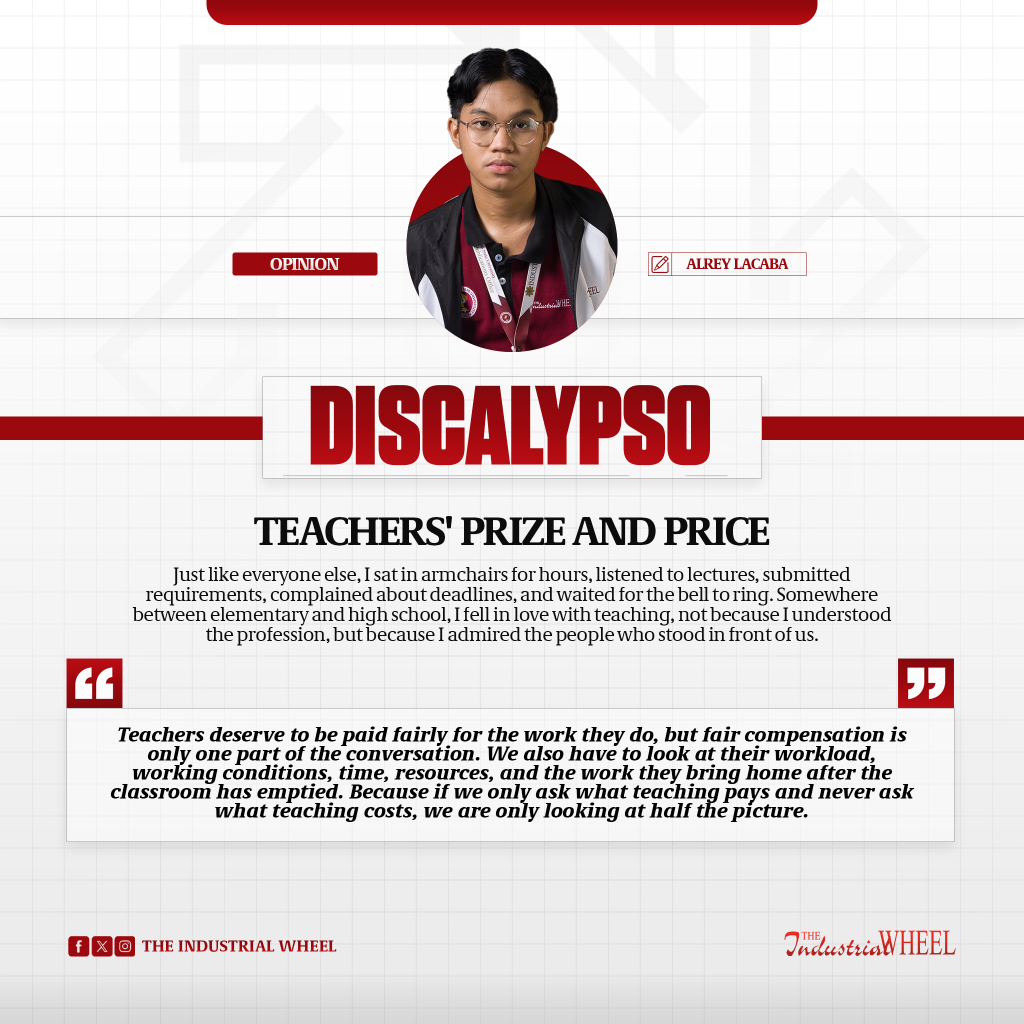
Just like everyone else, I sat in armchairs for hours, listened to lectures, submitted requirements, complained about deadlines, and waited for the bell to ring. Somewhere between elementary and high school, I fell in love with teaching, not because I understood the profession, but because I admired the people who stood in front of us.
My teachers made teaching look simple.
They walked into the classroom, picked up a marker, taught a lesson, answered our questions, checked our work, and somehow still had the energy to smile. As a student, I saw the prize of teaching, but I did not see the price behind it. I did not see the hours of preparation, paperwork, sleepless nights, and personal sacrifices that happened when we were no longer watching.
Cut to, now I am a fourth-year education student preparing for my teaching internship. I am slowly finding out what happens on the other side. And teaching only looks simple when you do not see the work behind it.
I have seen how much goes into preparing for a single lesson. There are lesson plans to write, instructional materials and presentations to prepare, reports to finish, deadlines to meet, and parents’ concerns to address. Then comes the poorly-ventilated classrooms, where teachers handle 50 students with different personalities and needs.
And when the school day ends, the work does not always end with it. Papers still need checking, reports still need finishing, lessons still need preparing, and messages still need answering. Just recently, during my teaching internship, my cooperating teacher shared that they even sometimes spend their own money on classroom supplies, learning materials, and other things their students need.
Yet some people still look at a teacher’s salary and ask, “Underpaid? How?”
I came across a post on social media that said exactly that. “Pet peeve ko ‘yung mga public school teachers na nagpo-post na underpaid daw sila. In what way? Entry level is 30k, plus ‘yung benefits pa like mid-year bonus, SRI, year-end bonus, and sometimes, may cash gifts pa as Christmas bonus…” the post read.
The post compared teachers’ salaries with those of non-government employees and questioned why teachers complain when their entry-level salary can reach around ₱30,000, on top of government benefits.
The 2026 salary grade matrix shows a ₱31,705 monthly basic salary for a Teacher I, before deductions and other considerations. That number is real, and so are the benefits that come with government employment. But so is the work that happens before class, during class, after class, and sometimes long after a teacher has already gone home.
This is why the word “underpaid” should not be reduced to a simple comparison of salaries. Teachers are not necessarily saying that ₱31,705 has no value, they are asking whether their compensation reflects the full weight of the work they are expected to carry. A salary can look decent on paper and still feel inadequate when the job takes more time, energy, and personal resources than the payslip shows.
As a matter of fact, teaching transcends beyond delivering lessons and giving grades. Teachers prepare, assess, document, communicate, organize, counsel, and respond to problems that can extend beyond the classroom. They are expected to help students learn while also keeping up with the demands placed on them as employees.
As my professor would often remind us in our Professional Education class, “teaching is a noble profession.” Teachers help shape the people who will eventually become doctors, engineers, nurses, lawyers, leaders, and workers in every corner of society. But calling teaching a noble profession should never mean that teachers are expected to sacrifice endlessly simply because they love what they do.
Love for the profession should not become a discount on the value of the work.
Teachers deserve to be paid fairly for the work they do, but fair compensation is only one part of the conversation. We also have to look at their workload, working conditions, time, resources, and the work they bring home after the classroom has emptied. Because if we only ask what teaching pays and never ask what teaching costs, we are only looking at half the picture.
Teachers deserve the prize of their profession without carrying its price alone.
Article by Alrey Lacaba