
Graphics by John Carl Acosta
As dengue cases continue to rise in Tacloban City, public health authorities are intensifying surveillance and community-based prevention efforts to help control the spread of the mosquito-borne disease.
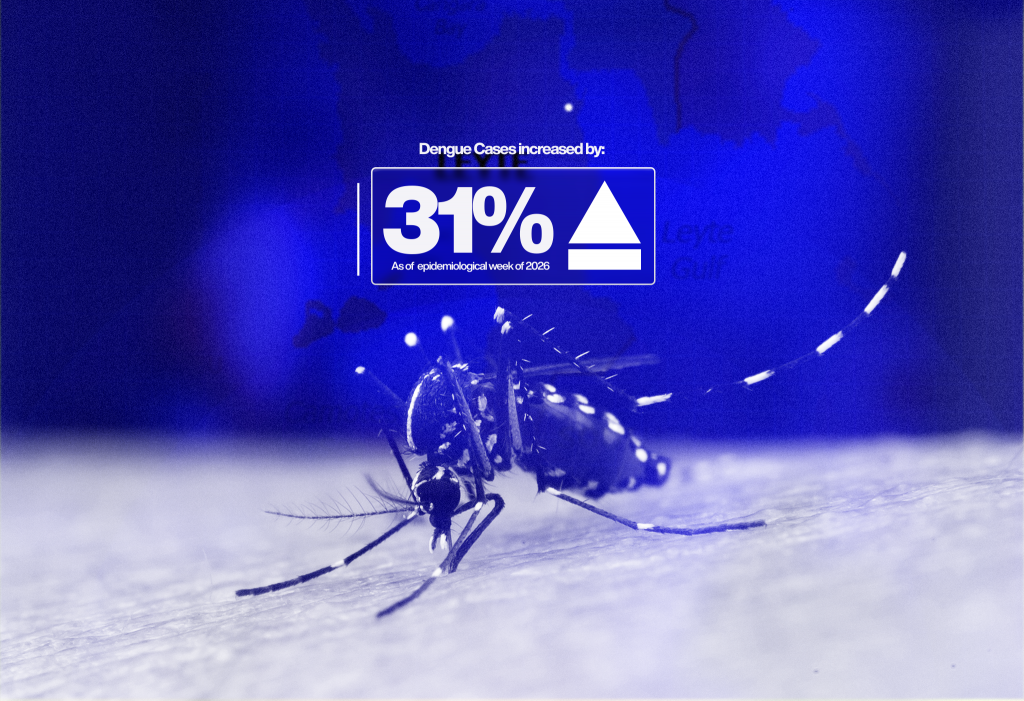
The Tacloban City Health Office has raised the Code Blue alert for public health after dengue cases reached 272 as of epidemiological week 32 of 2026, marking a 31% increase compared with the same period in 2025. The increase has led health authorities to strengthen monitoring and response measures, particularly in communities where dengue cases have begun to cluster.
The Code Blue alert, also known as an emergency response level for health systems, signals the need for increased preparedness and coordinated action among health facilities and personnel. It prompts hospitals and health workers to strengthen response measures and ensure that medical services are ready to handle a possible surge in severe dengue cases.
According to City Health Officer Dr. Jaime Opinion Jr., the City Disaster Risk Reduction and Management Office (CDRRMO) will continue fogging operations in barangays with reported dengue cases as part of the city’s response. The clustering of dengue cases in Barangays 91, 95, 52-B, 106, 53, 39, 93 and 71 in Tacloban City may indicate areas where dengue transmission is more active, allowing health authorities to identify communities at greater risk and prioritize targeted interventions.
As part of the local response, a search-and-destroy activity and dengue awareness campaign were conducted in Barangay 100 San Roque, Tacloban City, on Aug. 23, following three confirmed dengue cases in the barangay this month. Residents were encouraged to take part in the “Libong Mo, Limpyo Mo” program by regularly cleaning their surroundings to help prevent the spread of the disease in the community.
Dengue is a viral infection caused by any of the four dengue virus serotypes—DENV-1, DENV-2, DENV-3 and DENV-4—and is mainly transmitted to humans through the bite of an infected female Aedes mosquito, particularly Aedes aegypti. The mosquito breeds in water-filled containers such as discarded cans, old tires, uncovered buckets and other objects that collect rainwater.
The mosquito’s life cycle begins when eggs are laid in containers holding stagnant water, where they develop into larvae, then pupae and eventually adult mosquitoes. The cycle can be completed within just a few days, allowing mosquito populations to increase rapidly, especially during rainy periods when breeding sites are left undisturbed.
After a bite from an infected mosquito, dengue symptoms may appear after an incubation period of about four to 10 days. Common symptoms include sudden high fever, severe headache, pain behind the eyes, muscle and joint pain, nausea, vomiting and skin rashes. Warning signs include severe abdominal pain, persistent vomiting, bleeding from the gums or nose, blood in vomit or stool, extreme weakness or restlessness, and difficulty breathing.
Dengue is not usually transmitted directly from one person to another through casual contact, such as touching, sharing food or being near an infected person. However, a person can develop dengue more than once because infection with one serotype does not provide complete protection against the other serotypes, and subsequent infections may carry a higher risk of severe dengue.
Severe dengue can lead to plasma leakage, internal bleeding, shock and damage to vital organs, making it potentially life-threatening, particularly when warning signs are overlooked or patients are not properly monitored as the fever begins to subside. People with suspected dengue should avoid self-medicating with aspirin or ibuprofen without medical advice, as these medicines may increase the risk of bleeding.
Meanwhile, Dr. Opinion urged the public to take proactive measures against dengue by eliminating mosquito breeding sites, wearing protective clothing such as long sleeves and pants, using insect repellent and seeking medical attention promptly when symptoms or warning signs appear.
As Tacloban City continues its dengue response under Code Blue, sustained cooperation between health authorities and residents remains important in preventing a further increase in dengue cases, with every household contributing to a cleaner and safer community.
Article by Kyla de Paz